Showing posts with label Green. Show all posts

9.16.2010

Discussion // Complexity & Contradiction

(This will an evolving post, so don't be alarmed by the length. I will continue to update it as I notice further relationships.)

The rhetoric over theory vs. practice in architecture is tired and worn out, and if you've ever worked in an office you don't need to be told the differences. But for my generation, there are some new wrinkles in this complicated - and often criticized - relationship that are starting to affect the discipline as a whole. In the traditional model of architectural education and practice, the conflict could be modeled simply as a push and pull between design (form, art, sculpture, independence) and reality (economy, gravity, dependence).

Design < >  Reality

[Sant Elia - Futurist, but still with pen, paper, and straight edge. The forms are recognizable as buildings.]
Now I believe there is a third element to this conflict: technology. More specifically, computers and visualization software. For centuries, since the days when Brunelleschi doodled the famous structure of the dome, the methods of architectural representation remained relatively constant: drawing tool, straight edge, and paper. The use of such devices limited our ability to conceive of form beyond what was structurally possible or referential to some previous typology. Computers, on the other hand, have allowed our imaginative powers to far outrun our ability to practically create, because they not only translate what we think but also generate based on complicated sets of parameters or algorithms. As a result, a new style, or field of research (I don't really know what to call it) of "virtual architecture" has emerged, championed by the likes of Zaha Hadid / Patrik Schumacher, Roland Snooks and others, whose bearing on real architecture has yet to be fully explored or even explained clearly by those who profess it.
 
[Diaz Alonso - what in the world is this without context? How was it made?]
What all this leads to, at least with me since I feel like I'm not brilliant enough to decipher it all, is an incredible confusion as to what architecture - especially in this country - actually is and where I should focus myself in school. Should I look into parametric design simply because it's new and innovative, to broaden my horizons? Should I avoid it if I think it's irrelevant to my own interests? Should I even bother looking at history if the tools of the trade have evolved so much? These are questions I have to deal with even as I'm forced to struggle to catch up with learning new software (I've found out so far I'm very much behind). So now the conflicts in architecture look like this:

Design (Practical) < > Design (Virtual) < > Technology < > Reality < > Generational

Sometimes it's all a bit too much to handle, I'll admit. Now with the conflicts mapped out, I'm going to start keeping a list of contradictions in architectural practice vs. education, the purpose of which is not to completely discount what I learn, but simply to refer it to my ultimate goal of becoming an architect who builds buildings. Sure it's been done before many times, but I think it's healthy for every student of architecture to develop his or her own. I'll start off with a few, feel free to add, contribute, suggest, refute, etc.

1. The Role of the Architect in the Realization of Projects

This one is obvious. In school, you are taught ways of making cities better one building or project at a time, as if you are the spontaneous generator of the need.

8.28.2010

Discussion // "Lucky" Buildings

Just a little link here as I wind down for the weekend...I'll start posting some LA experiences here pretty soon.

I wonder what is it about a particular building that makes it lucky for tech businesses. Sure, there's the old adage of "location, location, location," but that applies more to marketability of real estate relative to local amenities and proximity to potential customers. Software companies, who themselves deal in the "virtual architecture" of computer programming, need neither retail nor on-site storage space to market their products. 

When successful tech companies, like Google and Pixar, do commission real architecture, the typical model of commercial construction, where businesses stay close to exposed and accessible city centers, seems not to apply. This is partly a result of the evolution of commodity to include transactable goods that are imaginary, i.e. data-only, and which impose no logistical demands of any kind, save bandwidth. [Hmm, that's an idea for a study of the economic geography of virtual infrastructure. Is that already a field of interest? I don't know.] Hence, many campuses of tech companies tend to first focus on catering to the health and welfare of the corporate employee (gasp!) to foster innovation. Yet, in doing so, they have already done something innovative  by shaking up the paradigm of corporate architecture. Some examples are even whimsical or theme-parkish in the ways they differ from or reject traditional American corporatism. Check out "Ebay Park" and "Googleplex" and "Pixar Headquarters," the last of which I've already posted a little bit about.

[eBay Park: the tech-bubble era funland]


I would say the one critique of "corporate utopianism" [to coin a new term] is that it is too suburban; it doesn't engage the city, as some might suggest architecture must for the benefit of our posterity. Though both Google's and Pixar's HQs are constructed "sustainably" using similar methods, and house suitably happy employees, there is a question over whether their isolation is an irresponsible rejection of urbanity. Maybe, maybe not. There is not enough information about the  long-term influence of the variable in the future equation: the substance-less commodity. As it is I'm in the process of learning a bit more of the philosophy behind urban design so I might be able to tell you in the near future. Until then, it's up for discussion.

I also can't tell you why that one building is so good at producing business blockbusters. The landlord did start his career selling Persian rugs, maybe there's a magic lamp hidden in the attic, who knows.

8.16.2010

Place // Little Rock, AR

>Little Rock, AR
Founded: 1831
Population: 192,000 (inc) 842,000 (metro, including North Little Rock and Pine Bluff)
Claim to Fame: Home of Bill Clinton

[If you'd like to see more pictures, please visit my Flickr gallery]

About two hours drive west of Memphis on the Arkansas River, Little Rock is best known at the Arkansas state capital and hometown of Bill Clinton. It is a modestly populated town, similar in size to Tulsa, Sarasota, Knoxville, Omaha, Baton Rouge, etc. The construction of the William J. Clinton Presidential Library to the south of downtown coincided with a major urban revitalization and the establishment of the pleasantly accommodating River Market District, a pedestrian-friendly corridor (named President Clinton Avenue...I'm sensing a trend..."I did not, have, sexual relations, with the person in charge of naming the streets and buildings.") with shops, residential units, hotels, and civic buildings terminating at the library's prominent hilltop perch.

The library is the city's architectural landmark. Built in 2004, the building's design anticipated then-upcoming LEED credit ratings through a series of sustainable initiatives. Exposed structure references a nearby bridge than spans the Arkansas River and provides a nice backdrop for the dramatic cantilever at the east end. The expansive library grounds border the nicely-sited Heifer International, which features its own fabulous green architecture and whose purpose is to study and educate in the field of sustainable agriculture.

"I may not have been the greatest president, but I've had the most fun eight years." –Bill Clinton

Side note: Is "Market" the new buzzword of this decade for public, urban open spaces? In the 70's and 80's it was "Plaza", in the 90's it was "Arts District." At least that's what it seems like, I haven't done any research on the subject.

[Heifer International]
[William J. Clinton Presidential Library]
[River Market on Clinton Avenue. Narrow streets + Trolley...]

8.12.2010

Photo // On The Road

The oil derrick of the 21st century....cool.

[Wind turbines at sunset in Oklahoma.]


More images and writings from my cross-country roadtrip coming soon...stay tuned!

7.24.2010

Building // Wal-Mart's Green Roof

This short demonstration explains the details behind the world's largest monitored green roof, which was recently installed on a Wal-Mart in Chicago. We have so much unused roof space in this country--I hope this project encourages more like it.

7.21.2010

Intro // A Particular Brand of Building

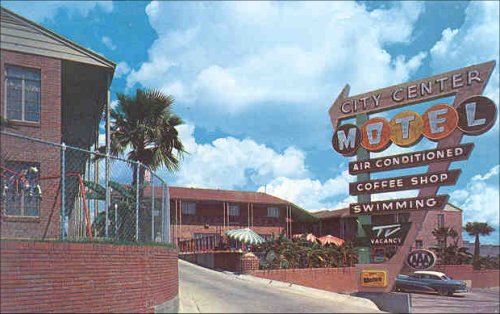
Here I intend to showcase the best and most interesting American commercial architecture with particular emphasis on corporate retail. In many ways this series of posts will be an ode to Venturian postmodern ideologies, but many companies are eschewing the “decorated shed” for a more integrated, design-oriented approach to edificial marketing that constitutes a more thoughtful response to urban conditions than the traditional American strip-mall, fast-food restaurant, etc. The posts about urban spas and garage reuse can be thought of as precursors to this topic.


^^^Target, Atlantic Station, Atlanta, GA. The actual Target logo is tiny, but the architecture is successful in conveying the brand image. Below, some Green features - plantings, trees, outdoor furniture, permeable surfaces.


The iconography of American commerce in a historical sense is tied to our automotive culture. Rather than acting as agents of restraint, bureaucrats, city planners and architects yielded to, and in several instances created, the changes in lifestyle brought about by the car’s popularity. The Federal-Aid Highway Act of 1956 established the interstate highway system, replacing the train as the primary means of long-distance ground transportation and connecting major cities to satellite towns called suburbs, which became the new standard of American urbanism. With the expansion of infrastructure, the Modern movement, which had taken hold in Europe decades earlier, began to flourish in American art and architecture.

Circumstance, meanwhile, forced businesses to adapt to these changes. Centers of American commerce shifted from town squares to mega-malls. Brand imagery became increasingly important as companies sought new ways of attracting transient suburban customers. Billboards, marquees, and other forms of signage, whose exaggerated scale and aggressive graphics were necessary persuasive devices, came to represent the physical division between businesses and the fast-moving traveling consumer. Cities that embraced the shift, like Las Vegas, a mere rail stopover before the construction of nearby Hoover Dam in 1935, seemed to emerge overnight and attract immediate attention.

7.18.2010

Lifestyle // Where I Lived, and What I Lived For


Title of this post refers to a chapter of Thoreau's Walden Pond that describes what man can learn from a simpler existence tied to a more direct connection with nature. Is this the next modern home - or is it anti-modern? Can we make cities and communities of this type of home? Will these communities be mobile? 

[Thanks to Vasu Abhiraman for the link.]

7.05.2010

Building // Decatur Fire Station No. 2


The first LEED-certified new construction (non-residential) in Decatur / Oakhurst.
Architect: LP3 Architecture (Amy Landesberg + Praxis 3)
USGBC Registration

6.30.2010

Discussion // Big Green Machine

A friend of mine sent me a posting today from a politics/culture blog predicting that new "heroic architecture" - the kind that makes careers, awes the public, defines a city, becomes the topic of documentaries, etc. - will eventually spawn from the fledgling (but intensifying) Green movement.
^^^One Bryant Park, NYC (Rendering) by Cook+Fox Architects. First LEED Platinum Skyscraper in the US...first truly heroic Green building?